UN Regulation R151/R159/R158
View More










A dash cam with DMS monitoring is no longer simply a recording device used to review accidents after they occur. By combining road-facing video, in-cab driver monitoring, artificial intelligence, event recording, and fleet connectivity, it can help commercial vehicle operators identify unsafe behavior before it develops into a serious incident. For fleets facing long driving hours, demanding delivery schedules, driver shortages, and increasing insurance costs, this transition from passive recording to proactive risk prevention represents an important change in fleet safety management.
Traditional dash cameras primarily answer one question: What happened on the road? A Driver Monitoring System, or DMS, adds another critical dimension by answering: What was the driver doing immediately before and during the event? When these functions are integrated into one platform, fleet managers gain a more complete understanding of the relationship between driver behavior, road conditions, and vehicle risk.
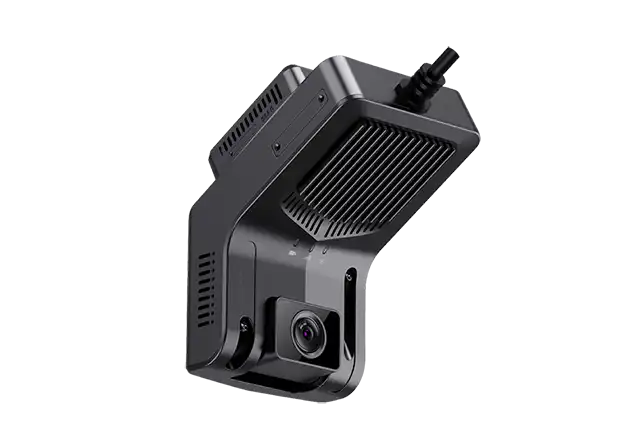
A commercial vehicle dash cam normally records the road ahead and stores footage locally on an SD card or other storage medium. More advanced models may also support GPS, 4G connectivity, event uploads, cloud-based video access, and additional camera channels.
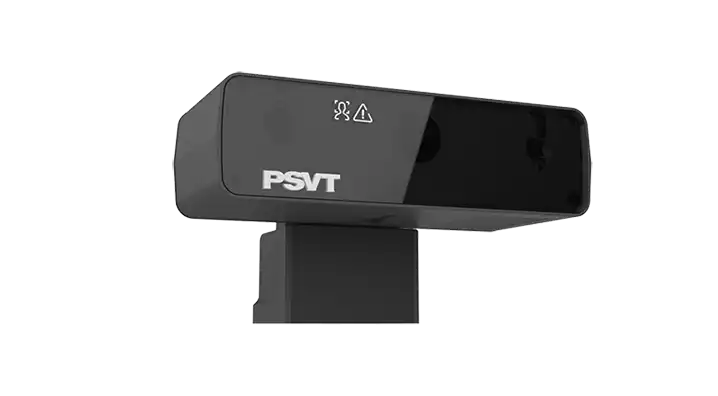
DMS uses an inward-facing camera and AI algorithms to monitor the driver. Depending on the system configuration, it can recognize signs of fatigue, distraction, phone use, smoking, prolonged eye closure, yawning, head lowering, and abnormal changes in viewing direction. When unsafe behavior is detected, the system can issue an audible or visual warning inside the vehicle.
A dash cam with DMS monitoring brings these two capabilities together. The road-facing camera captures the driving environment, while the in-cab camera evaluates the driver’s condition. If a risk event occurs, the device can save synchronized footage from both views, record the vehicle location and speed, and upload the relevant video clip to a fleet management platform.
This combination gives fleet operators contextual evidence instead of isolated data. A harsh-braking event, for example, may have been caused by an unexpected pedestrian, a vehicle cutting into the lane, or a distracted driver noticing traffic too late. Road video alone may not provide the complete answer. Synchronized road-facing and driver-facing footage makes the event easier to interpret accurately.
Commercial drivers operate in conditions that can increase fatigue and distraction. They may work early morning or overnight shifts, spend long periods on highways, repeatedly enter congested urban areas, or perform demanding maneuvers in narrow worksites. Delivery drivers may also face pressure from tight schedules and frequent route changes.
Driver fatigue does not always begin with the driver falling asleep. It may initially appear as slower reactions, frequent yawning, longer eye closure, poor lane control, or reduced awareness of surrounding traffic. These early signs are difficult for a remote fleet manager to observe without an automated monitoring tool.
Distraction is equally complex. It can result from mobile-phone use, adjusting an electronic device, eating, smoking, or looking away from the road for an extended period. Even a short loss of attention can become dangerous when a heavy commercial vehicle is travelling at speed or operating near pedestrians, cyclists, and other vulnerable road users.
Periodic training and safety policies remain important, but they cannot monitor every journey. DMS extends safety supervision into daily operations and can warn the driver at the moment when corrective action is needed.
One of the most important advantages of an AI-enabled fleet camera is its ability to intervene before an accident occurs. A traditional dash cam creates evidence but normally does not influence the event while it is happening. DMS changes that role.
When the system detects prolonged eye closure, repeated yawning, distraction, or phone use, it can immediately activate an in-cab warning. This gives the driver an opportunity to refocus, stop using the phone, or take a break. The objective is not merely to document unsafe behavior but to interrupt the chain of events that could lead to a collision.
The dash cam with DMS monitoring can also create an event record for later review. Fleet managers can use these records to identify repeated patterns, such as a driver showing fatigue during a particular shift, distraction occurring on certain routes, or risky behavior increasing near the end of a working day.
Over time, these insights can support changes to scheduling, rest policies, route planning, training, and driver coaching. The value of the system therefore extends beyond individual warnings. It can help the business improve its broader safety operation using objective evidence.
The available detection functions depend on the camera, algorithm, installation position, and system configuration. Common DMS functions include:
The system can analyze characteristics such as prolonged eye closure, frequent blinking, yawning, head lowering, or other patterns associated with drowsiness. Early warnings encourage the driver to regain attention or stop in a safe location.
DMS can identify when the driver looks away from the expected road-viewing area for too long. This function is particularly useful in urban traffic, where conditions can change within seconds.
The algorithm may detect when the driver is holding or using a phone. This helps fleets enforce mobile-device policies and reduce one of the most common sources of driver distraction.
For fleets with no-smoking policies, AI monitoring can recognize smoking-related behavior. This may also help operators manage vehicle cleanliness, cargo requirements, and workplace safety rules.
An advanced solution may detect whether the driver is absent from the normal seating position or whether the in-cab camera has been deliberately covered. These functions improve the reliability of the monitoring process.
Event-detection performance can be affected by sunglasses, facial coverings, low light, camera angle, driver posture, and cabin layout. Fleet operators should therefore evaluate detection accuracy under realistic vehicle conditions rather than relying only on laboratory specifications.
A driver-monitoring alert becomes more useful when it can be linked to the external driving situation. If the system detects distraction and the vehicle brakes suddenly five seconds later, synchronized footage can show whether the behavior contributed to the event.
This is where a dash cam with DMS monitoring offers greater operational value than a standalone in-cab sensor. It can combine driver status with road video, GPS location, time, speed, and G-sensor data. Some platforms can also receive vehicle data through interfaces such as CAN bus, depending on compatibility and project requirements.
When an event is generated, the system can protect the relevant footage from being overwritten by normal loop recording. A connected model can upload a short event clip through 4G, allowing authorized personnel to review important incidents without physically retrieving the SD card.
This event-based approach is more efficient than continuously transferring every minute of video. It reduces mobile-data consumption while helping fleet managers focus on higher-risk events.
Synchronized road and driver footage helps reconstruct events more accurately. Fleet managers can see the external hazard, the driver’s response, and the vehicle’s movement within the same timeline. This can reduce uncertainty and shorten the investigation process.
Commercial vehicles may be involved in disputed accidents or fraudulent claims. Clear video evidence can help determine responsibility and protect drivers and fleet operators when the commercial vehicle was not at fault.
Generic safety training treats all drivers as if they have the same risk profile. Event data enables targeted coaching based on actual behavior. One driver may need support with fatigue management, while another may require coaching related to mobile-phone use or forward attention.
Policies are more effective when they are measurable. A fleet can track how frequently specific behaviors occur, whether they decrease after coaching, and whether particular shifts, depots, or routes have higher risk levels.
A serious collision can result in vehicle downtime, repair expenses, missed deliveries, administrative work, reputational damage, and possible legal costs. Preventing even a limited number of incidents can create meaningful operational value.
Driver monitoring should not be used only to identify negative behavior. Fleets can also use event data to recognize drivers who consistently demonstrate safe habits. This creates a more balanced safety culture and may improve acceptance of the technology.
The technology can be adapted to multiple types of fleet operations.
For long-haul trucks, fatigue monitoring is particularly valuable because drivers spend extended periods on monotonous roads. For city buses and coaches, distraction detection can help protect passengers and vulnerable road users in complex urban environments.
Delivery fleets can use event recording to manage risk across vehicles that perform frequent stops and operate under schedule pressure. Construction, mining, and utility vehicles benefit from monitoring drivers who work in demanding environments or switch between road travel and worksite operation.
Waste-collection vehicles frequently stop, reverse, and operate close to workers and pedestrians. In these applications, DMS can complement external blind-spot detection, rear-view cameras, and 360-degree surround-view systems.
The same concept can also be applied to taxis, ride-hailing fleets, school buses, emergency vehicles, agricultural machinery, and other vehicles where driver attention and event evidence are important.
Technology alone does not create a safer fleet. Its effectiveness depends on how the organization responds to the information it produces.
The first step is to establish clear rules defining which events require immediate intervention, which should be reviewed during routine coaching, and which may be treated as isolated low-risk incidents. Without a defined process, fleet managers can become overwhelmed by alerts.
The second step is to prioritize repeated behavior and high-severity events. A single short glance away from the road may not carry the same risk as repeated phone use or prolonged eye closure at highway speed. Event severity, duration, frequency, location, and driving conditions should all be considered.
The third step is to use footage constructively. Coaching should explain the detected behavior, show why it was risky, and identify a practical corrective action. When drivers understand that the objective is accident prevention rather than constant surveillance, they are more likely to accept the system.
Finally, fleets should track whether behavior improves after intervention. A reduction in repeated alerts provides evidence that the coaching process is working.
An inward-facing camera naturally raises questions about privacy. Fleet operators should address these concerns before deployment.
Drivers should be informed about what the system records, when recording occurs, which events are uploaded, who can access the footage, how long data is retained, and how it will be used. Local privacy, employment, and data-protection requirements must also be considered in each operating market.
Access should be restricted to authorized personnel, and the platform should support appropriate account permissions and security controls. Fleets should avoid retaining footage longer than necessary and should define clear procedures for exporting or sharing video.
Communication is essential. A dash cam with DMS monitoring should be presented as a safety and driver-protection tool. It can provide evidence when a driver reacts correctly, faces an unavoidable hazard, or is wrongly blamed for an incident. This balanced explanation can improve trust and encourage driver cooperation.
Commercial fleet buyers should assess the complete solution rather than selecting a device based only on camera resolution or price.
Important considerations include:
A device used in a commercial truck must tolerate voltage fluctuations, vibration, temperature changes, dust, and long operating hours. Automotive-grade reliability is therefore as important as AI functionality.
A standalone solution may be suitable for smaller fleets that mainly need local recording, basic DMS warnings, and accident evidence. It can be more economical and may require less platform integration.
A connected dash cam with DMS monitoring is better suited to fleets that need centralized visibility across many vehicles. Through GPS and mobile connectivity, it can upload events, display vehicle locations, support remote video access, and create driver-risk reports.
Large fleets should also evaluate whether the device can integrate with an existing fleet management system. APIs, platform compatibility, data formats, and user-management structures can influence the long-term value of the solution.
The right choice depends on fleet size, operating region, risk level, connectivity coverage, internal safety resources, and total cost of ownership.
For commercial vehicle OEMs, integrating an AI dash cam can add a visible safety feature without requiring a complete vehicle architecture redesign. Depending on the project, the device may be offered as factory-installed equipment, a dealer option, or part of a broader connected-vehicle package.
OEM programs may require customization of the housing, wiring harnesses, connectors, startup interface, communication protocol, diagnostic functions, and vehicle integration. Long-term software support and product lifecycle management are also important.
Distributors, telematics providers, and fleet solution integrators can combine DMS cameras with GPS tracking, fleet management software, ADAS, blind-spot detection, MDVR, or 360-degree surround-view systems. This allows channel partners to offer a complete fleet safety solution rather than a single hardware product.
The strongest commercial proposition is often not the camera itself. It is the ability to convert video and AI events into an actionable safety-management process.
The return from driver-monitoring technology should be evaluated across several areas. Potential benefits include fewer preventable accidents, faster investigations, lower claims exposure, reduced vehicle downtime, more efficient coaching, and stronger compliance with internal safety policies.
Fleets should establish a baseline before deployment. Useful indicators include collision frequency, harsh-braking events, fatigue alerts, distraction alerts, phone-use incidents, claim-processing time, vehicle downtime, and repeat behavior after coaching.
A pilot program can compare results across selected vehicles, routes, or depots. During the pilot, operators should examine detection accuracy, false-alert frequency, driver feedback, data consumption, platform usability, and installation quality.
This structured evaluation provides a stronger business case than relying on product specifications alone.
The future of fleet video is moving toward deeper integration. Driver monitoring can be combined with forward collision warnings, lane-departure warnings, blind-spot detection, pedestrian and cyclist detection, AVM, MDVR storage, GPS tracking, and remote fleet management.
In such an architecture, the dash cam becomes one part of a connected safety ecosystem. Road and driver cameras collect visual data, AI algorithms identify hazards, the vehicle warns the driver, and selected events are sent to the management platform. Fleet managers can then review incidents, coach drivers, optimize policies, and measure improvement.
This closed-loop process connects detection, warning, evidence, management, and prevention. It is significantly more valuable than simply recording video for use after an accident.
Commercial fleets need more than evidence of what happened after a collision. They need tools that can recognize developing risks, warn drivers in real time, and provide fleet managers with information they can use to prevent future incidents.
A dash cam with DMS monitoring supports this objective by connecting the driver’s condition with the road environment and vehicle event data. It can detect fatigue and distraction, protect important footage, accelerate accident investigations, support targeted coaching, and strengthen safety-policy enforcement.
For fleet operators, the right solution can become a practical risk-management tool. For OEMs, distributors, and system integrators, it offers an opportunity to deliver a more complete commercial vehicle safety package.
The key is to select a reliable platform, configure it for the operating environment, address driver privacy transparently, and connect alerts to a consistent management process. When technology and fleet policy work together, video monitoring can evolve from a passive recorder into an active part of everyday fleet safety.