UN Regulation R151/R159/R158
View More











Commercial vehicle safety regulations are becoming a major business priority for fleet operators, OEMs, body builders, vehicle importers and safety technology distributors. In the past, many companies treated commercial vehicle safety regulations as a legal topic handled mainly by compliance teams. Today, commercial vehicle safety regulations directly influence vehicle purchasing, product design, retrofit planning, tender requirements, insurance discussions and fleet safety performance. For companies operating trucks, buses, coaches, construction vehicles or urban delivery fleets, understanding commercial vehicle safety regulations is no longer optional. It is now part of building a safer, more competitive and more future-ready fleet.
The commercial vehicle industry is under growing pressure to reduce collisions involving vulnerable road users, including pedestrians, cyclists, roadside workers and passengers. Heavy vehicles operate in complex environments such as city streets, construction sites, logistics hubs, ports, bus stops and highways. In these scenarios, a driver may face blind spots, poor visibility, tight turning areas, reversing risks, driver fatigue or speed-limit changes. Commercial vehicle safety regulations are designed to reduce these risks by requiring or encouraging safety technologies that help drivers detect danger earlier and react faster.
For B2B fleet buyers, commercial vehicle safety regulations should not be seen only as rules to avoid penalties. They should be seen as a practical roadmap for safety investment. When commercial vehicle safety regulations require blind spot detection, moving-off warning, reversing detection, driver monitoring or speed assistance, they are pointing to the highest-risk areas in daily fleet operation. A fleet that understands commercial vehicle safety regulations can make better decisions about which vehicles to upgrade first, which safety functions are most important, and which suppliers can support long-term compliance.
The European Union’s General Safety Regulation is one important example. New EU vehicle safety rules apply to new motor vehicles sold in the EU from July 2024, while the same framework already applied to new vehicle types from July 2022. The European Commission says these rules introduce advanced driver assistance systems to improve road safety. For trucks and buses, the Commission highlights safety areas such as blind-spot recognition, collision warnings for pedestrians and cyclists, and tyre pressure monitoring.
One of the biggest changes in commercial vehicle safety regulations is the shift from passive safety to active safety. Traditional safety thinking focused heavily on reducing injury after an accident, for example through stronger vehicle structures, seatbelts or crash protection. These areas remain important, but modern commercial vehicle safety regulations increasingly focus on preventing the accident before it happens.
Active safety technologies include cameras, radar, ultrasonic sensors, AI detection, driver monitoring, speed assistance and warning systems. These technologies help the driver recognize risk before a collision occurs. For commercial vehicles, this is especially valuable because trucks and buses have larger blind zones, longer stopping distances and more complex turning paths than passenger cars.
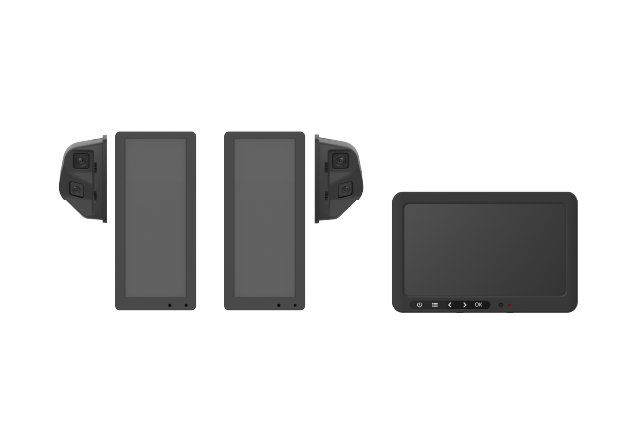
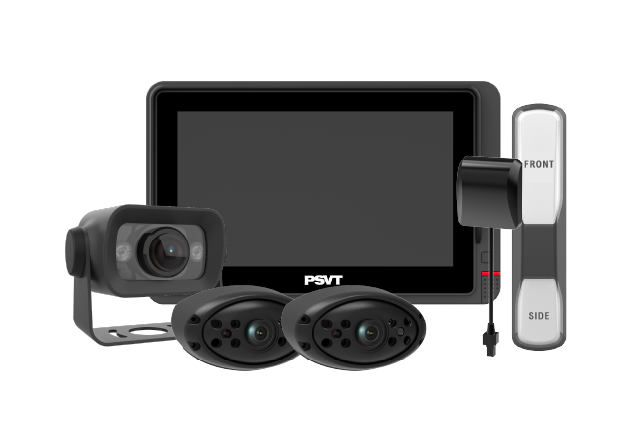
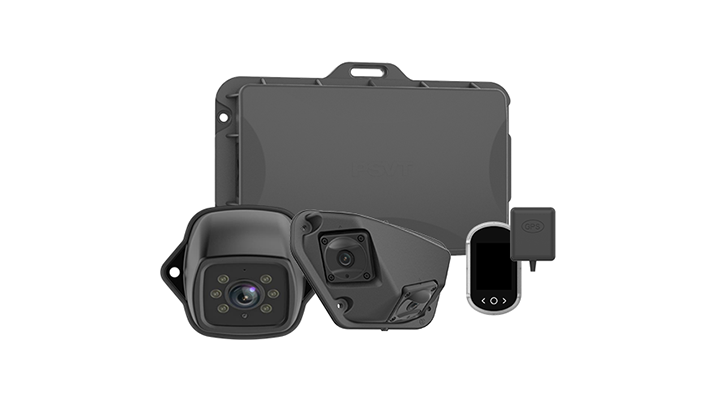
Commercial vehicle safety regulations now encourage a more intelligent vehicle safety architecture. Instead of relying only on mirrors and driver experience, fleets are moving toward systems that can detect vulnerable road users, alert drivers during turning or moving off, support reversing safety, monitor driver attention and provide better visibility around the vehicle. This is why commercial vehicle safety regulations are driving demand for camera monitor systems, blind spot information systems, moving off information systems, reversing detection systems, intelligent speed assistance and driver monitoring systems.
Commercial vehicle safety regulations can be grouped into several practical categories. The first category is visibility and blind spot reduction. This includes regulations and standards related to mirrors, camera monitor systems, direct vision and side detection. The second category is vulnerable road user protection, including detection of pedestrians and cyclists near the front, side or rear of the vehicle. The third category is driver assistance and driver attention, including speed assistance, drowsiness warning and distraction warning. The fourth category is data, cybersecurity and software management, which becomes more important as vehicles rely on connected and software-based systems.
For fleets, the practical meaning is clear: commercial vehicle safety regulations are moving toward full-area risk awareness. The vehicle must be safer not only when driving forward at speed, but also when turning, moving off, reversing, stopping, operating in low-speed urban areas or working close to vulnerable road users.
Urban operation is one of the strongest drivers of commercial vehicle safety regulations. Cities face pressure to reduce collisions between heavy vehicles and vulnerable road users. As a result, local access rules can sometimes be stricter or more urgent than national requirements. London’s Direct Vision Standard is a good example. Transport for London states that HGVs over 12 tonnes gross vehicle weight need a valid HGV safety permit to operate in most of Greater London. TfL also explains that zero-, one- and two-star vehicles now need the Progressive Safe System, and that operating without a valid permit may lead to a penalty charge.
This type of city-level rule changes how fleets think about compliance. A vehicle may be mechanically reliable and legally registered, but it may still face access restrictions if it does not meet local safety requirements. For international logistics companies, municipal service fleets, construction contractors and last-mile distribution operators, commercial vehicle safety regulations can directly affect route planning and business continuity.
This is why B2B buyers need to evaluate safety systems based on real operating areas. A long-haul truck working mainly on highways may require different safety priorities from a refuse truck operating in narrow streets or a city bus stopping frequently near pedestrians. Commercial vehicle safety regulations provide the compliance baseline, but the best fleet safety strategy should also reflect route type, vehicle body, driver workload and accident-risk scenarios.
Commercial vehicle safety regulations are now an important part of procurement strategy. When purchasing new vehicles, fleets should ask whether the required safety functions are factory-installed, type-approved, documented and serviceable. When upgrading existing vehicles, fleets should ask whether retrofit solutions can meet operational requirements and whether installation can be standardized across different vehicle models.
A strong procurement process should not ask only, “Does this product have AI?” or “Does this camera record video?” Instead, the procurement team should ask more specific questions: Which commercial vehicle safety regulations does this system support? Is the system designed for trucks, buses or special vehicles? Does it support right-hand-drive and left-hand-drive markets? Can it detect pedestrians and cyclists in the required zones? Does it provide visual and audible warnings? Can it work at night, in rain, under strong sunlight and in vibration-heavy environments?
By using commercial vehicle safety regulations as a purchasing framework, fleets can avoid buying generic products that look attractive but do not solve compliance problems. This is especially important for B2B buyers because the cost of a poor safety system is not limited to product price. It can include reinstallation, vehicle downtime, driver complaints, failed inspections, contract risk and potential liability after an incident.
Advanced Driver Assistance Systems, or ADAS, are central to modern commercial vehicle safety regulations. ADAS technologies can help detect lanes, vehicles, pedestrians, cyclists, speed signs, driver fatigue and collision risks. For commercial vehicles, ADAS is not only about convenience. It is about reducing high-severity events in demanding operating environments.
Functions such as Forward Collision Warning, Lane Departure Warning, Pedestrian Collision Warning, Blind Spot Detection, Moving Off Information System, Reversing Detection, Driver Monitoring and Intelligent Speed Assistance all support the broader purpose of commercial vehicle safety regulations. They give drivers more information at the right time and help reduce dependence on mirrors alone.
However, not all ADAS solutions are equal. Fleet operators should pay attention to detection accuracy, false alarm rate, environmental robustness, warning logic, system latency, camera image quality, sensor placement and driver acceptance. If a system creates too many false alerts, drivers may ignore it. If the image is unclear at night or in rain, the system may fail in real fleet conditions. Commercial vehicle safety regulations create the requirement, but product quality determines whether the system truly improves safety.
Commercial vehicle safety regulations may require safety systems, but drivers are the people who use them every day. A successful fleet safety program must consider driver acceptance from the beginning. If drivers see safety technology as intrusive, unreliable or distracting, the fleet may struggle to achieve real safety improvement.
Good system design should provide clear, timely and understandable warnings. Alerts should be strong enough to attract attention but not so frequent that they become background noise. Visual warnings should be placed where the driver can see them without losing focus on the road. Audible warnings should be appropriate for the driving scenario. The goal of commercial vehicle safety regulations is not to overload the driver with alarms, but to help the driver identify genuine risk.
Training is also important. Fleets should explain why commercial vehicle safety regulations are changing, what each system does, what the warning levels mean and how drivers should respond. When drivers understand that the system is designed to protect them as well as pedestrians, cyclists and passengers, acceptance is usually higher.
Many fleets cannot replace all vehicles immediately. This makes retrofit planning a major part of compliance with commercial vehicle safety regulations. Retrofit solutions are especially important for older trucks, buses, coaches, municipal vehicles and construction vehicles that still have years of useful service life.
A practical retrofit strategy should begin with a fleet audit. List vehicle type, model year, body configuration, operating region, current safety equipment and expected service life. Then group vehicles by risk level and regulatory urgency. Vehicles operating in restricted urban areas, near vulnerable road users or under public contracts should usually be prioritized.
Commercial vehicle safety regulations can then be translated into retrofit packages. For example, an urban HGV may need blind spot detection, nearside camera coverage, audible warning, moving-off detection and event recording. A bus may require camera monitor systems, driver monitoring, reversing assistance and passenger-area safety integration. A construction vehicle may need rugged cameras, AI detection, radar, reversing safety and IP-rated components.
The key is not to retrofit randomly. The key is to create a scalable safety architecture that matches commercial vehicle safety regulations and actual operating risk.
For OEMs and body builders, commercial vehicle safety regulations influence design from the earliest development stage. Camera location, monitor position, cable routing, power supply, CAN communication, diagnostics, cybersecurity, electromagnetic compatibility and environmental protection must be considered early. If safety systems are added too late, installation may become complicated, expensive or unreliable.
OEMs should also think about export readiness. Vehicles sold into different regions may need to meet different commercial vehicle safety regulations. A platform designed with flexible sensor integration and modular software can adapt more easily to EU, UK, U.S. and local market requirements. FMCSA explains that U.S. federal motor carrier regulations are published in the Federal Register and compiled in the Code of Federal Regulations, with FMCSA regulations under 49 CFR Parts 300–399 and Federal Motor Vehicle Safety Standards under 49 CFR Part 571.
This means global suppliers cannot assume one regulation equals global compliance. Commercial vehicle safety regulations must be mapped by market, vehicle category and application. OEMs that plan for this early can reduce redesign cost and support customers more effectively.
Many companies first respond to commercial vehicle safety regulations because they have to. However, leading fleets use compliance as a business advantage. A fleet with strong safety systems can improve tender competitiveness, support ESG reporting, reduce operational risk and strengthen customer trust. In public transport, waste collection, logistics, construction and urban delivery, safety reputation matters.
For distributors, commercial vehicle safety regulations create an opportunity to move from product selling to solution selling. Instead of promoting only cameras or monitors, distributors can provide compliance packages, installation support, documentation, driver training and after-sales service. This approach is more valuable to fleet customers and creates stronger long-term relationships.
For safety technology manufacturers, commercial vehicle safety regulations provide a clear direction for product development. Systems should be designed around real regulatory scenarios: blind spot detection, moving-off warning, reversing safety, speed assistance, driver monitoring, indirect vision and fleet management integration. The more closely a product solves real compliance and safety problems, the easier it is to communicate value in the B2B market.
A good roadmap for commercial vehicle safety regulations should include five steps.
First, identify the regulations that apply to each operating market. This includes national vehicle rules, city access requirements, tender requirements and customer-specific safety standards.
Second, classify vehicles by risk and urgency. Urban trucks, buses, construction vehicles and vehicles operating near vulnerable road users often require earlier attention.
Third, match safety functions to risk scenarios. Blind spot detection helps with turning risk. Moving-off detection helps with front blind zones. Reversing detection helps with rear visibility. Driver monitoring helps with fatigue and distraction. Intelligent Speed Assistance helps with speed-limit compliance.
Fourth, test systems before large-scale rollout. A pilot project should measure detection performance, false alarms, installation time, driver feedback, maintenance needs and system reliability.
Fifth, document everything. Keep installation records, training materials, test evidence, user manuals, maintenance logs and software version records. Documentation helps fleets prove that they have taken commercial vehicle safety regulations seriously.
Commercial vehicle safety regulations are reshaping the future of trucks, buses and special vehicles. They are pushing the industry toward smarter detection, better visibility, stronger driver assistance and more systematic fleet safety management. For B2B buyers, the message is clear: commercial vehicle safety regulations should be part of every vehicle procurement, retrofit and fleet upgrade decision.
Companies that understand commercial vehicle safety regulations early can plan better, avoid rushed purchases, reduce compliance pressure and improve road safety outcomes. Companies that wait may face higher costs, limited supplier options, city access problems or operational disruption.
The best approach is to treat commercial vehicle safety regulations not as a one-time checklist, but as a long-term safety strategy. Start with the required functions, then build a scalable technology platform around real fleet risks. Use cameras, radar, AI detection, driver monitoring, speed assistance, recording and fleet platforms where they create measurable value. In a market where safety, compliance and uptime are increasingly connected, commercial vehicle safety regulations are not only rules to follow. They are a competitive advantage for fleets that act early.