Algorithms Platform
Algorithms Platform
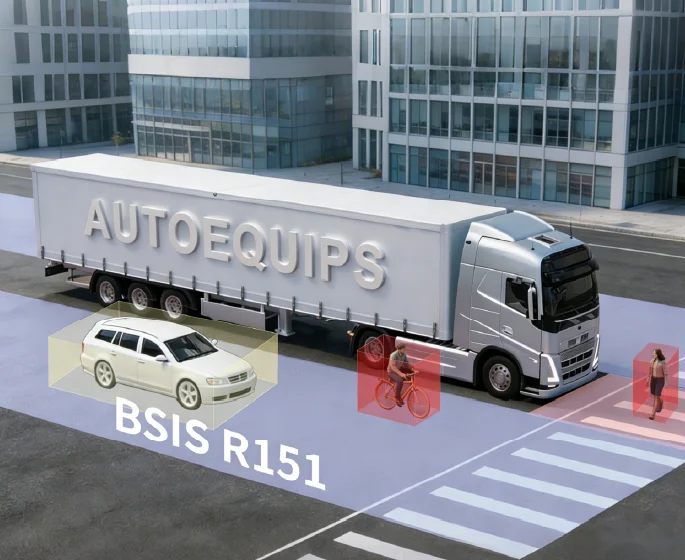
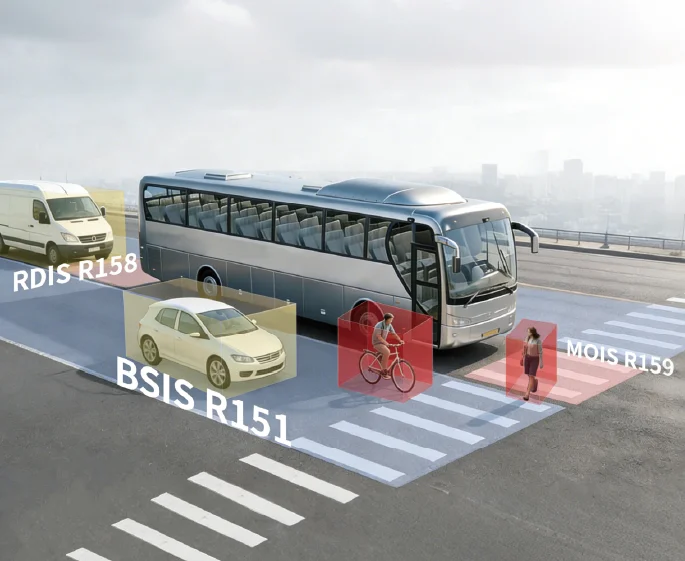
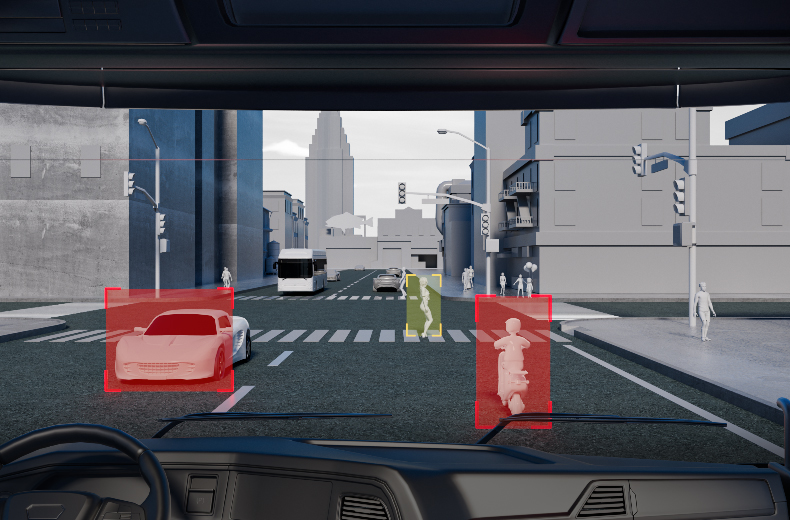
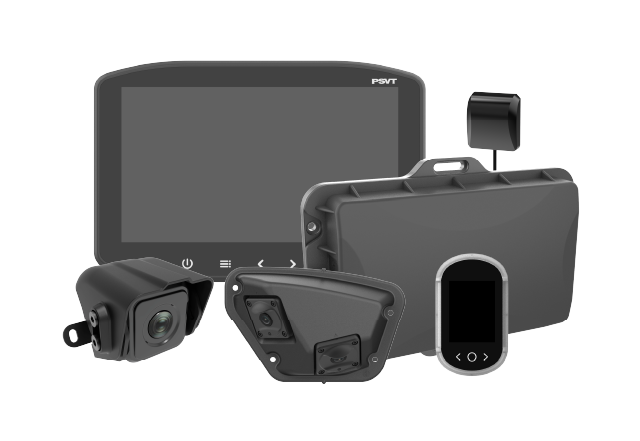
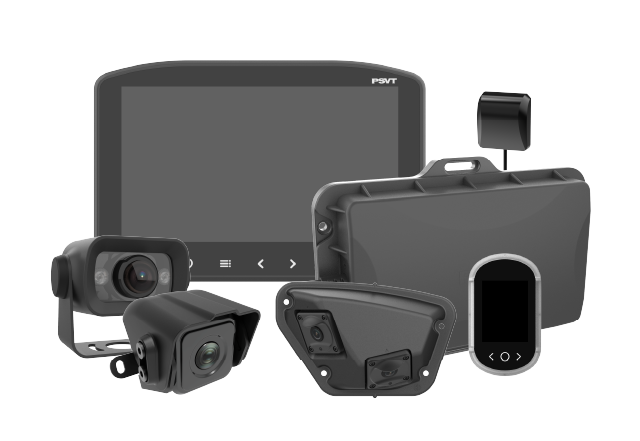
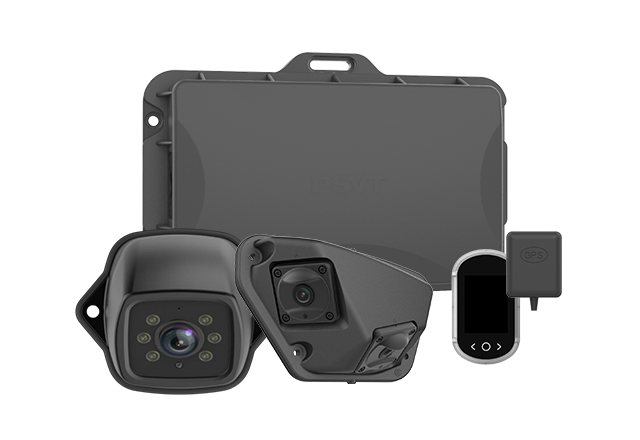
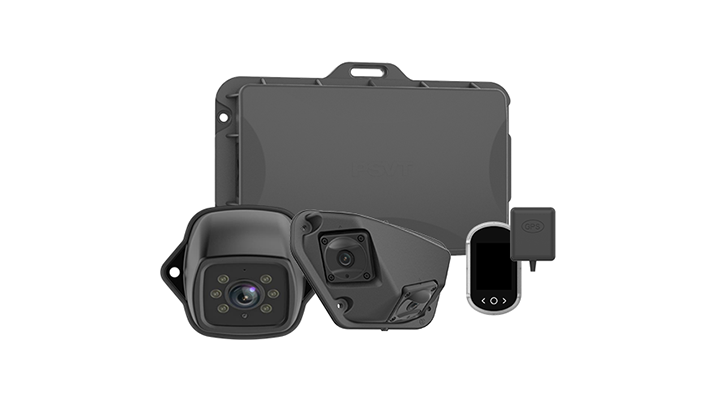
AUTOEQUIPS focus on active safety algorithms for commercial vehicles, with in-house AVM 360 surround view, MOIS moving-off protection, RVCS rear view, and BSD/BSIS blind-spot monitoring, all compliant with UN ECE R151/R158/R159. Built on a Perception–Planning–Execution architecture, our system fuses camera and radar data with detection, tracking, distance and trajectory estimation plus model-lightweighting to deliver high-accuracy risk awareness on low-compute edge platforms.
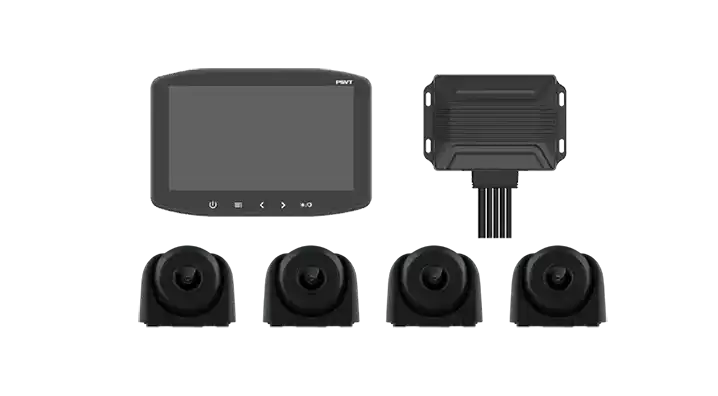
AVM
(Around View Monitoring System / 360° Surround View System)
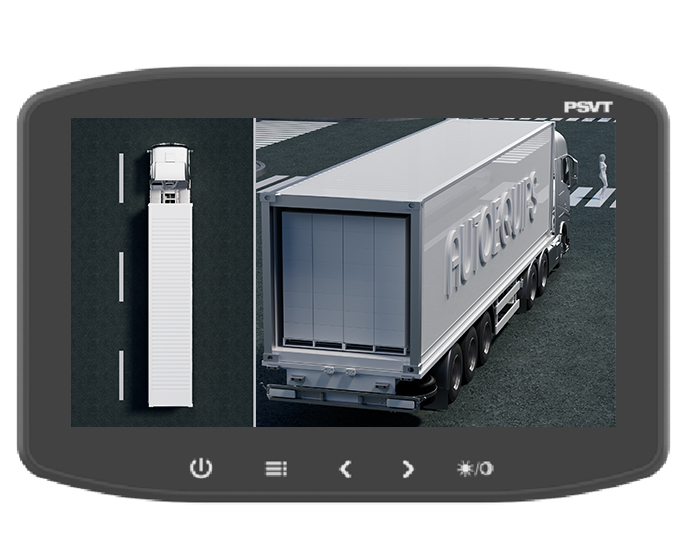
AVM is a surround view system that installs wide-angle cameras at the front, rear, left, and right sides of the vehicle. The system captures real-time images from each camera and processes them in the vehicle's computing unit through distortion correction, perspective transformation, image stitching, and GPU rendering to generate a bird's-eye 360° composite view, which is then displayed in real time on the in-vehicle screen.
AVM Algorithm Advantages
Full Surround Coverage
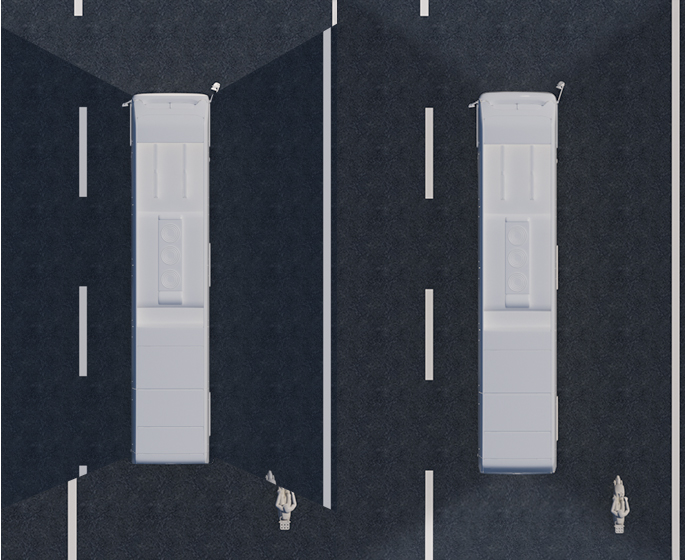
In-house bottom and surrounding 3D modeling provides true 360° surround monitoring with no blind spots, effectively eliminating driver blind zones.
Multi-View Switching
Supports bird's-eye, 2D, and 3D views with dynamic switching, allowing users to freely adjust viewing angles.
Vehicle Adaptability
Through parameter calibration, the system can adapt to different camera installation positions and heights.
Gray-Level Compensation
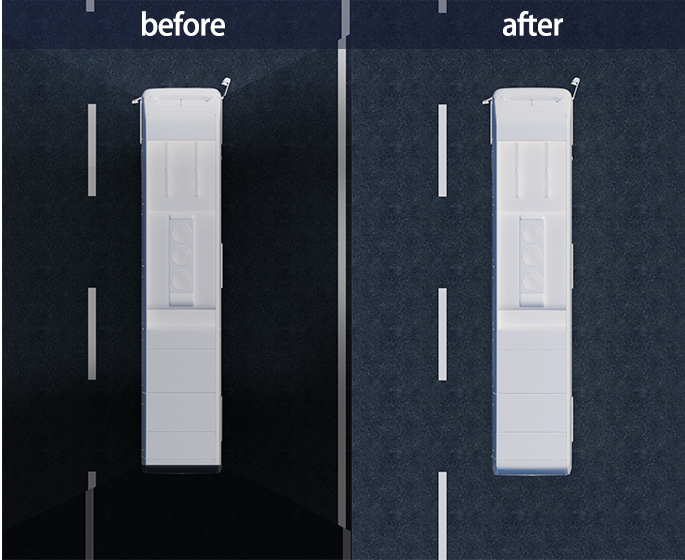
Eliminates exposure differences between multiple camera scenes, resulting in seamless surround-view images without visible stitching lines.
Seamless Blending
Avoids blind spots at stitching seams where objects might disappear and eliminates the visible stitching line on the ground.
Expandability
Can be extended to a 6-channel AVM setup to meet the needs of longer vehicle types.
BSD/BSIS
(Blind Spot Detection / Blind Spot Information System)
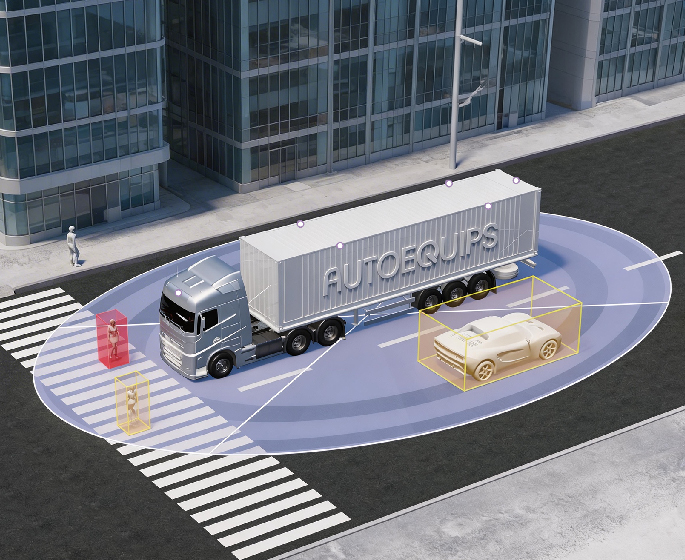
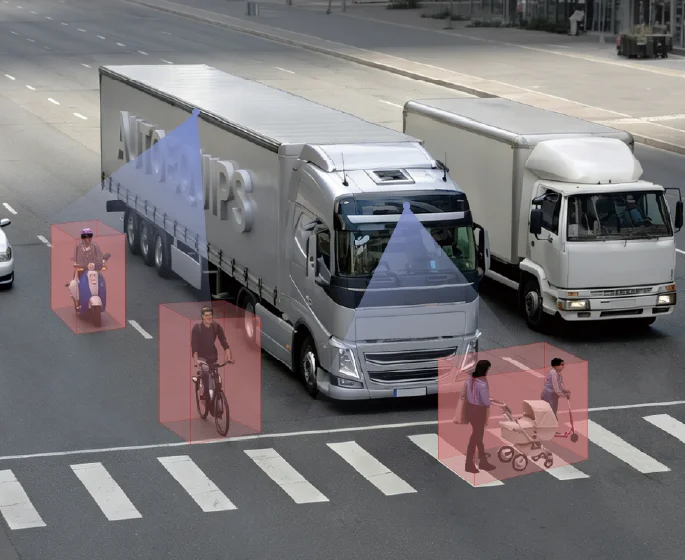
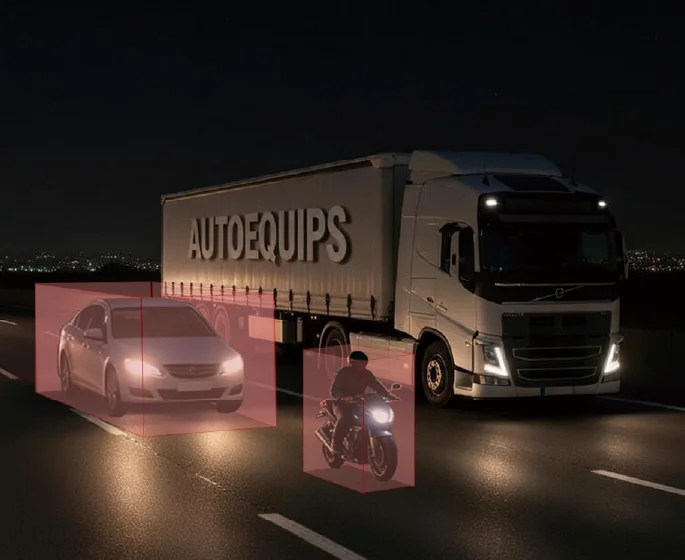
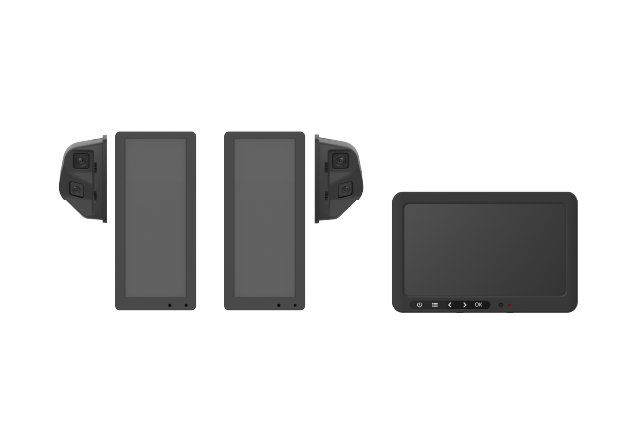
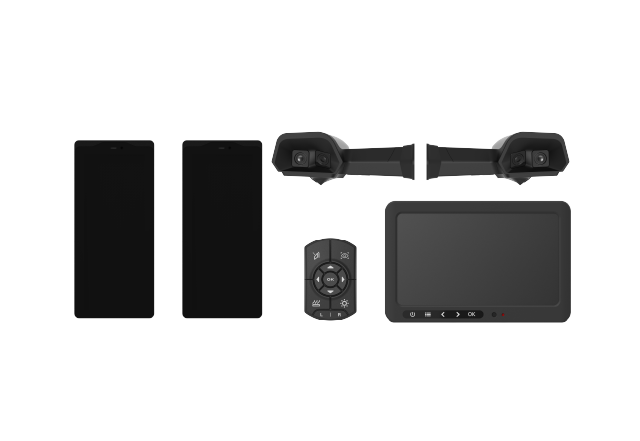
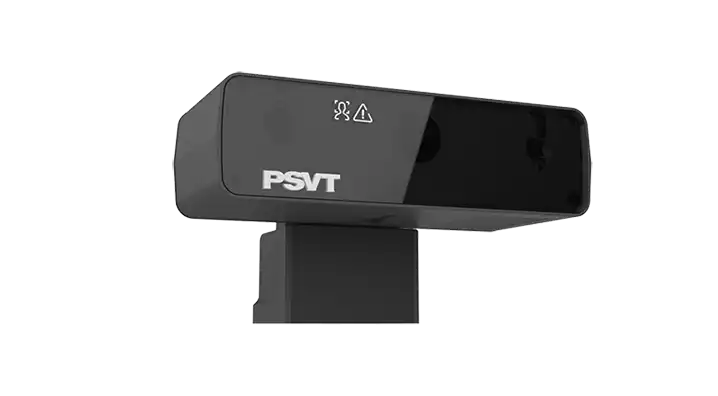
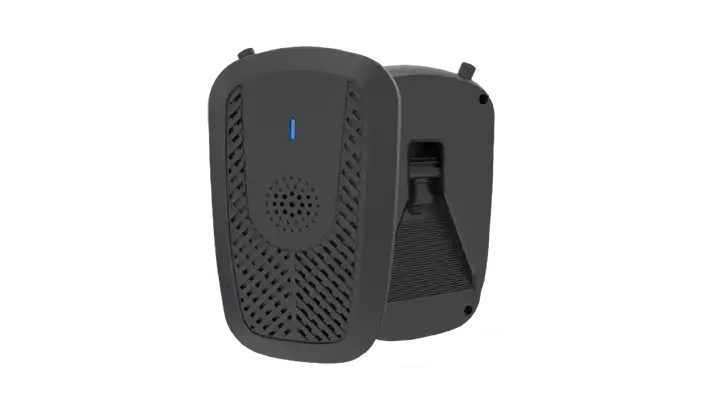
BSD is a safety system that monitors blind spots at the side and rear of the vehicle. By installing sensors on the sides of the vehicle, the system scans blind zones in real time and identifies surrounding vehicles, cyclists, e-bike riders, and pedestrians. When there is a lane-change risk, it issues visual and/or audible warnings to prevent lane-change collisions. The system can be implemented using cameras and/or millimeter-wave radar.
BSD Algorithm Advantages
Regulatory Compliance
Fully compliant with UN ECE R151 and certified; mandatory for new vehicles in Europe.
Protection of Vulnerable Road Users
Detects pedestrians, cyclists, and e-bike riders with detection rate >98% and accuracy >95%.
BSD Functionality
Detects vehicles in the blind spot and uses TTC (Time-to-Collision)–based alerts to fulfill BSD detection requirements with detection rate >98% and accuracy >95%.
Trajectory Prediction
Beyond static detection, the system uses object tracking algorithms to predict motion trends and only warns for targets whose true trajectory is moving toward the vehicle body.
Accurate Distance Estimation
Through distance calibration, the system estimates true object distance and can be paired with position-based precise warnings.
Night Operation
Operates 24/7 (day/night). It can detect targets in scenes brighter than 5 lux, outperforming the 15 lux threshold required by regulations.
Radar Fusion
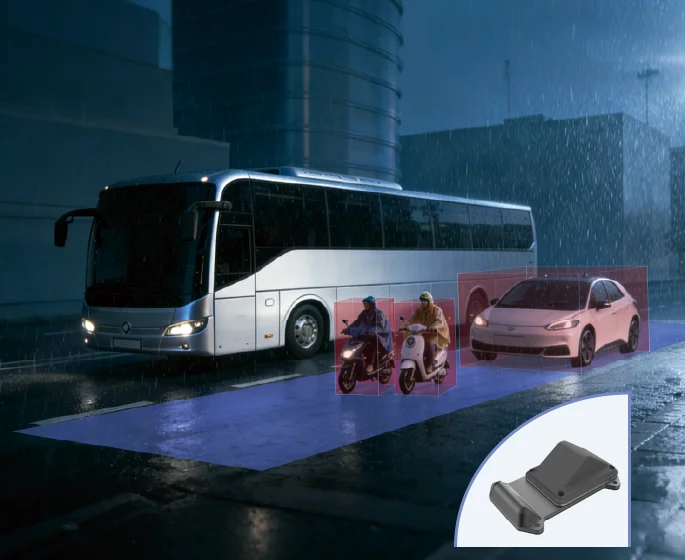
Optional 77–79 GHz millimeter-wave radar modules can be fused with camera data to enhance detection performance in heavy rain, fog, and nighttime, delivering higher safety and reliability.
Multi-Mode Alerts
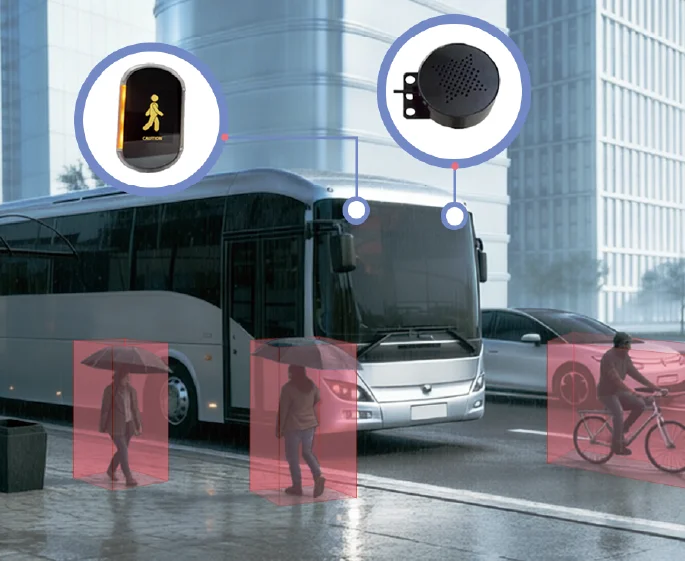
Visual alerts (flashing indicators) and audible alerts (buzzer/voice). Warning levels are graded by vehicle speed and target distance to provide real support rather than distraction.
Vehicle Adaptability
Calibration data is optimized for different installation height ranges, supporting camera installation heights from approximately 2.0 m to 3.5 m.
MOIS
(Moving Off Information System/Front Moving-Off Blind Spot Warning System)
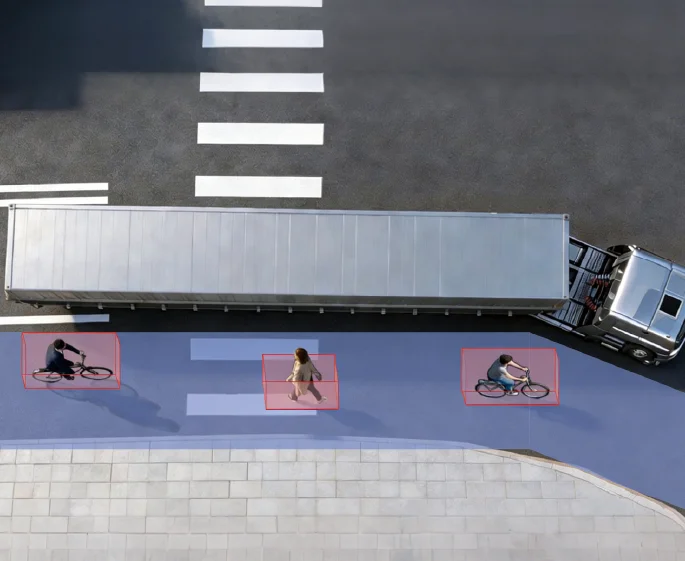
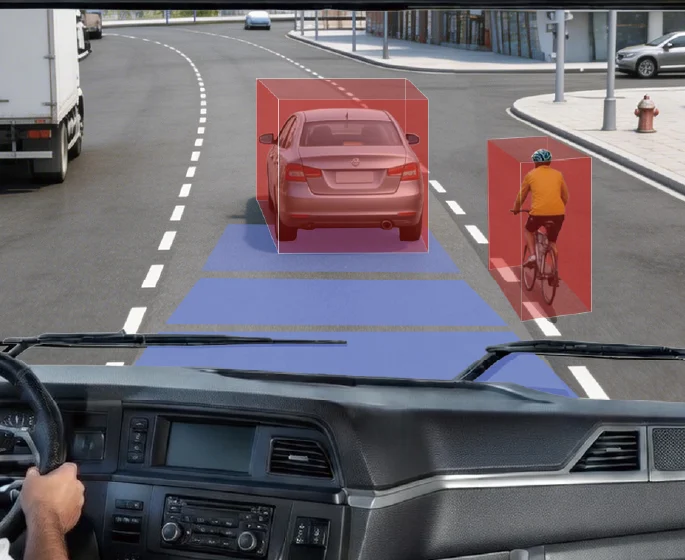
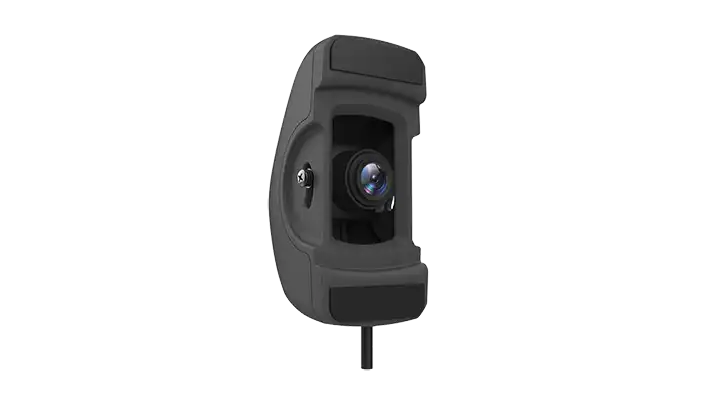
MOIS is a moving-off safety system specially designed for commercial vehicles such as buses and trucks. When the vehicle is stationary or moving off at low speed, the front camera monitors vulnerable road users in the blind zone. If a collision risk is detected, the system issues visual and audible warnings to the driver in compliance with UN ECE R159 requirements.
MOIS Algorithm Advantages

01

Regulatory Compliance
Fully compliant with UN ECE R151 and certified; mandatory for new vehicles in Europe.

02

Protection of Vulnerable Road Users
Detects pedestrians, cyclists, and e-bike riders with detection rate >98% and accuracy >95%.

03

BSD Functionality
Detects vehicles in the blind spot and uses TTC (Time-to-Collision)–based alerts to fulfill BSD detection requirements with detection rate >98% and accuracy >95%.

04

Trajectory Prediction
Beyond static detection, the system uses object tracking algorithms to predict motion trends and only warns for targets whose true trajectory is moving toward the vehicle body.

05

Accurate Distance Estimation
Through distance calibration, the system estimates true object distance and can be paired with position-based precise warnings.

06

Night Operation
Operates 24/7 (day/night). It can detect targets in scenes brighter than 5 lux, outperforming the 15 lux threshold required by regulations.

07

Radar Fusion
Optional 77–79 GHz millimeter-wave radar modules can be fused with camera data to enhance detection performance in heavy rain, fog, and nighttime, delivering higher safety and reliability.

08

Multi-Mode Alerts
Visual alerts (flashing indicators) and audible alerts (buzzer/voice). Warning levels are graded by vehicle speed and target distance to provide real support rather than distraction.

09

Vehicle Adaptability
Calibration data is optimized for different installation height ranges, supporting camera installation heights from approximately 2.0 m to 3.5 m.
RVCS
(Rear View Camera System)
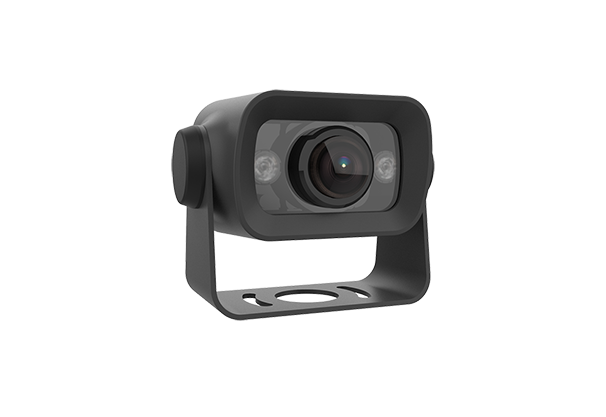
RVCS is a rear-view camera system mounted at the back of the vehicle. A high-resolution camera captures the dynamic environment behind the vehicle in real time and displays it on the in-vehicle monitor. The system can be integrated with AI capabilities to detect pedestrians/vehicles and provide collision warnings, as well as support parking and reversing assistance functions.
RVCS Algorithm Advantages
Regulatory Compliance
Fully compliant with UN ECE R158 and certified; mandatory for new vehicles in Europe.
Parking and Collision Avoidance
Beyond meeting the mandatory regulatory field-of-view requirements, the system uses AI to actively detect potential collisions with pedestrians, cyclists, e-bike riders, and vehicles, achieving detection rate >98% and accuracy >95%.
Trajectory Prediction
Beyond static detection, the system integrates object tracking algorithms to predict motion trends and provide early warnings 1–2 seconds in advance.
Accurate Distance Estimation
Via distance calibration, the system estimates true object distance and can be combined with position-based precise warnings.
Night Operation
Operates 24/7 (day/night). It can detect targets in scenes brighter than 5 lux, outperforming the 15 lux brightness requirement in regulations.
Vehicle Adaptability
Calibration data is optimized for different installation height ranges, meeting R158 field-of-view requirements when the driver is 0.6–1 m away from the screen and the camera is installed at heights from approximately 1.9 to 4 m.
General Perception
Technology Architecture
Technical Framework
Adopts a three-layer architecture of Perception – Planning – Execution
01
Perception Layer
Visual and radar sensors → In-house AI detection models (single-task / multi-task) supporting bounding-box detection and semantic segmentation.
02
Planning Layer
In-house de-warping/distortion-correction algorithms → True distance conversion → Kalman filter–based object tracking, trajectory prediction, and speed estimation → Collision risk assessment.
03
Execution Layer
Based on regulations or risk levels, the system determines alert intensity or braking intervention and outputs corresponding commands to the HMI system or warning devices.
Model Lightweight / Quantization
Model lightweighting is achieved using a combination of three main techniques:
Quantization 01
Post-Training Quantization (PTQ): Quantizes the model directly after training; fast and cost-effective, typically using 8-bit quantization.

Quantization-Aware Training (QAT): Simulates quantization effects during training, keeping accuracy loss within <2%.
Model Pruning 02
Weight Pruning: Removes weight connections below a given threshold.

Structural Pruning: Removes entire convolution blocks or attention heads for more significant acceleration.
Knowledge Distillation 03
Uses a large model (teacher network) to guide a smaller model (student network), retaining accuracy while reducing parameter count by 40–60%.
Perception Algorithm Advantages
Extreme Model Compression with Minimal Accuracy Loss
In-house AI model lightweighting techniques make it easier to deploy algorithms on low-compute edge platforms.
01/02
Extreme Model Compression with Minimal Accuracy Loss
In-house AI model lightweighting techniques make it easier to deploy algorithms on low-compute edge platforms.
01/02
Contact Us

Name

Company Name

* Email

* WhatsApp/Phone

Message

Verification code

Consult now

0755-86016313